40% merchant activation growth through self-serve platform
How I turned a manual, account-manager-dependent workflow into a structured operational platform for merchants and internal teams.
Overview
The Merchants Center is a 0→1 internal platform I designed at Kenzz to replace spreadsheet-based seller onboarding and catalog workflows. It helped:
- reduce product time-to-market from 11 days to 2 days
- cut frontend content errors by 94%
- lower order rejection rates by 13%
- support 40% merchant activation growth without account-manager dependency.
The challenge
Kenzz scaled from 1,000 products to 45,000+ SKUs without a central tool for merchants onboarding, product creation, pricing, or publishing.
Internal teams relied on Google Sheets and manual developer scripts, while new merchants had no self-serve platform and depended on account managers to register them.
This created two urgent problems:
High time-to-market
New merchant batches took an average of 11 business days to go live.
Costly errors
Manual data entry caused broken variants, pricing mistakes, and order cancellations.
Why?
Merchant registration depended on account managers manually copying information.
Product data was managed through spreadsheets and developer scripts.
There was no central system for pricing, variants, media, or publishing.
Teams handled high-volume catalog work with tools not designed for scale.
Merchants had no direct way to manage their products information.
Process
Process overview
I'm heavily influenced by the double diamond approach,
- I question existing flows from first principles
- I break the problem down
- I develop solutions and prioritize them with the team
- I deliver and test results
I shadowed operations workflows and mapped the needs of the people responsible for onboarding, catalog setup, and pricing validation. I grounded the system around four role-based workflow needs:
Catalog Specialist
Needs to bulk upload and structure large product datasets, sometimes 3,000 rows at a time, through Excel or CSV workflows.
Content Editor
Needs to review imagery, clean up visual inconsistencies, verify aspect ratios, and attach swatches efficiently.
Pricing Manager
Needs validation safeguards to prevent costly mistakes, such as incorrect decimal placement in pricing.
Merchants
Needs a structured way to submit registration and product information for approval without depending entirely on an account manager.
Solution
I designed a merchant platform as a central tool for merchant onboarding and product operations, with three major system layers:
Merchant Sign-Up Flow
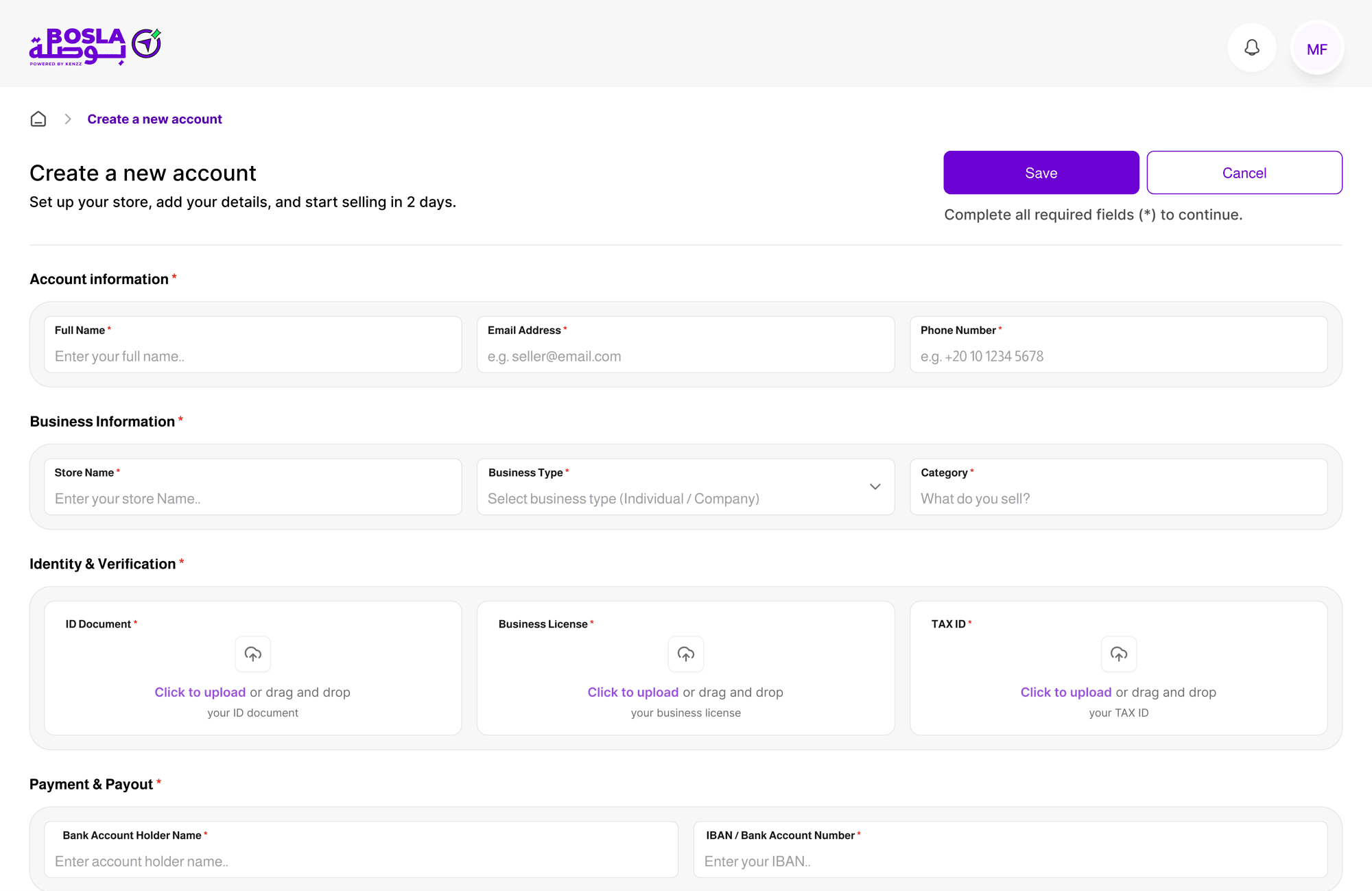
I created a structured registration interface that groups related inputs and guides merchants through the required data. Account managers could then validate submissions and send feedback.
Multi-Attribute Matrix Builder
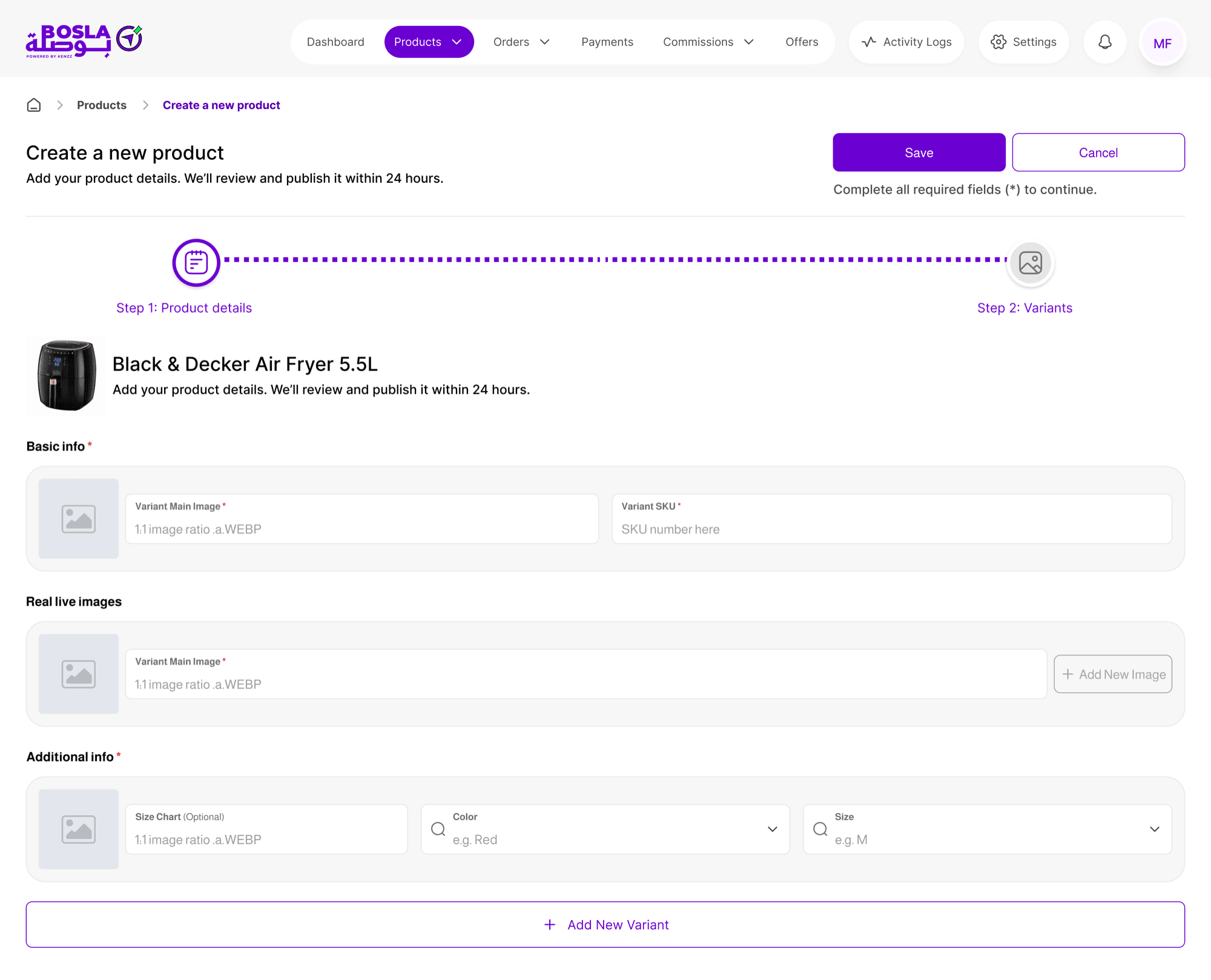
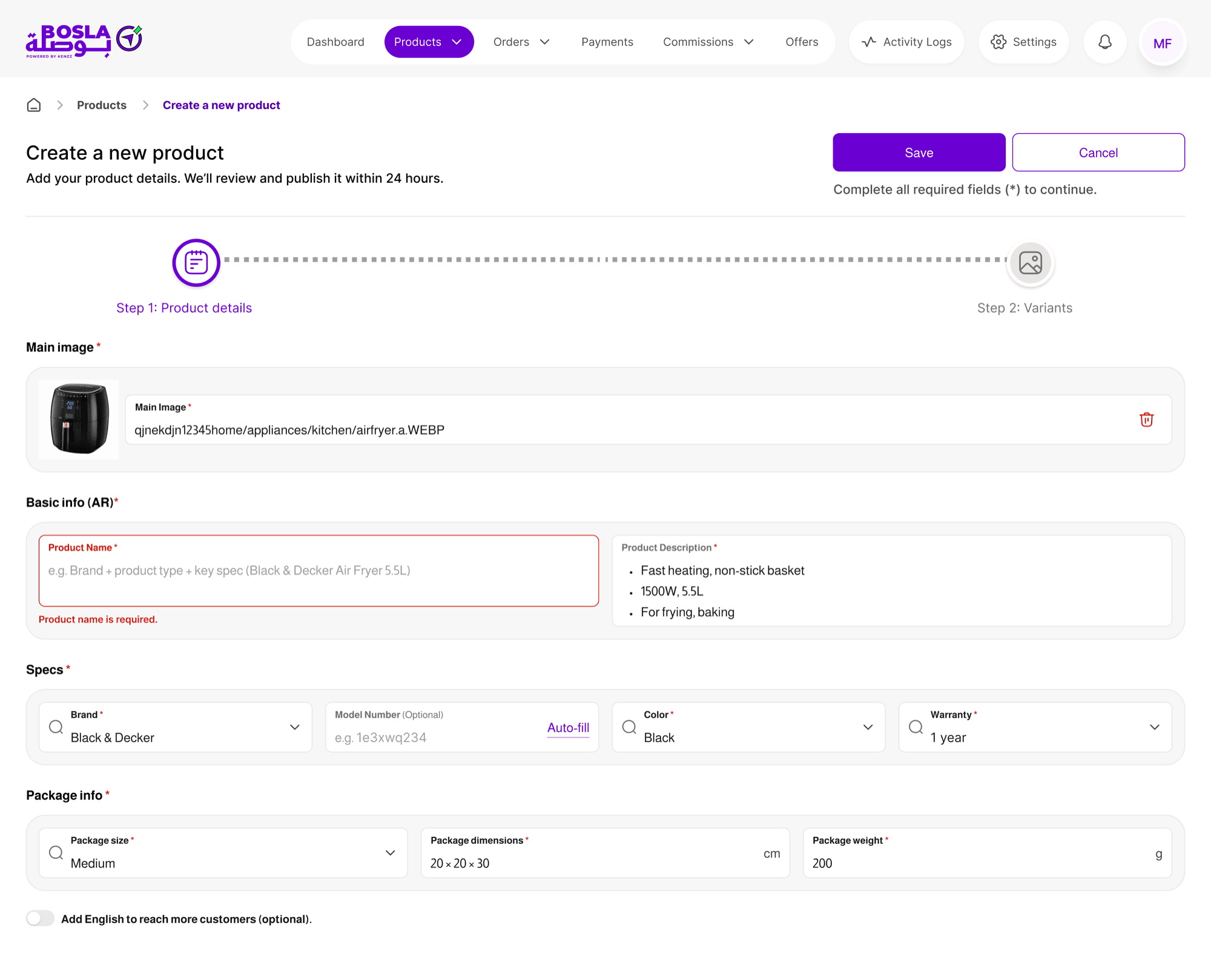
For configurable products like shirts with multiple sizes and colors, I replaced linear forms allowing users to select variants on one screen without loading new pages.
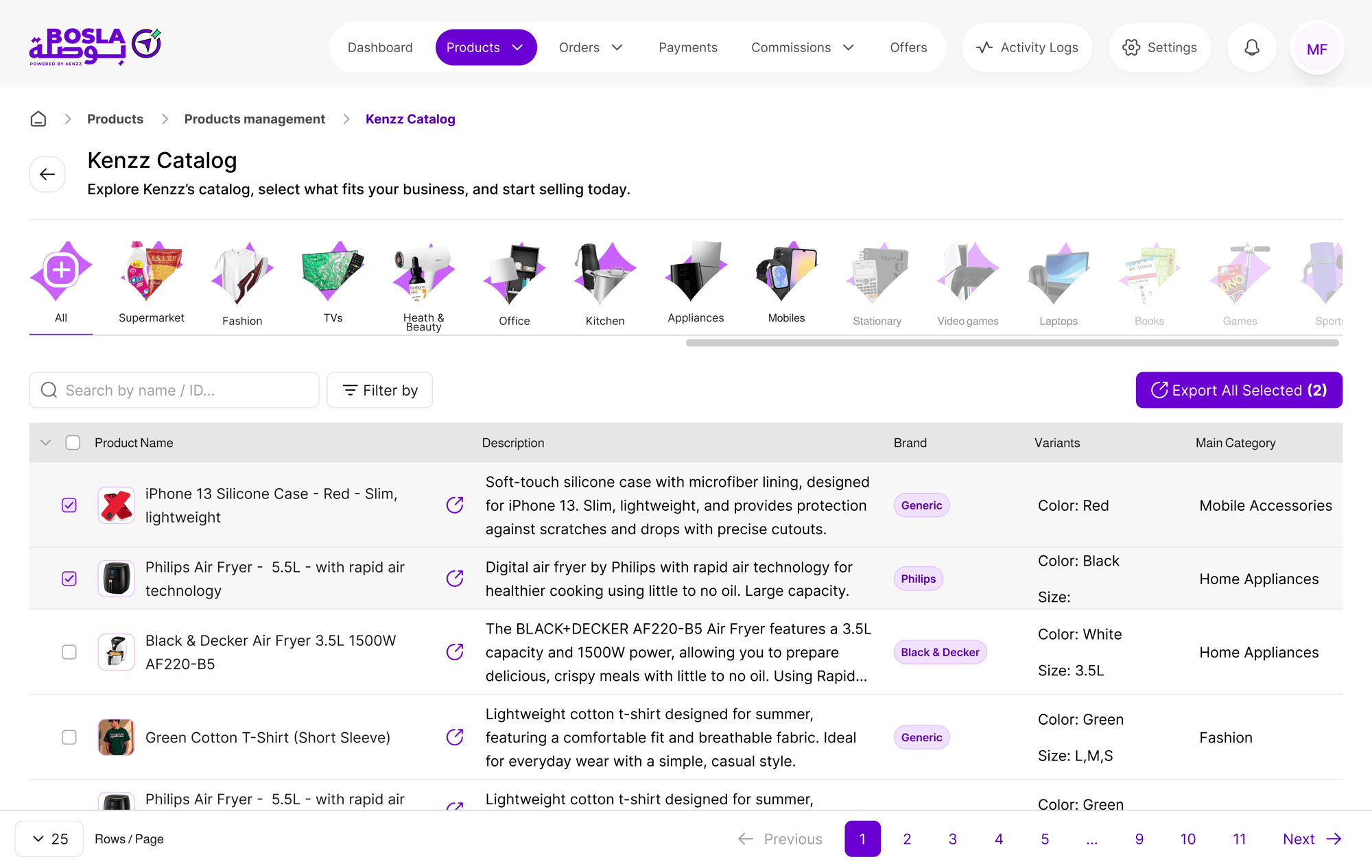
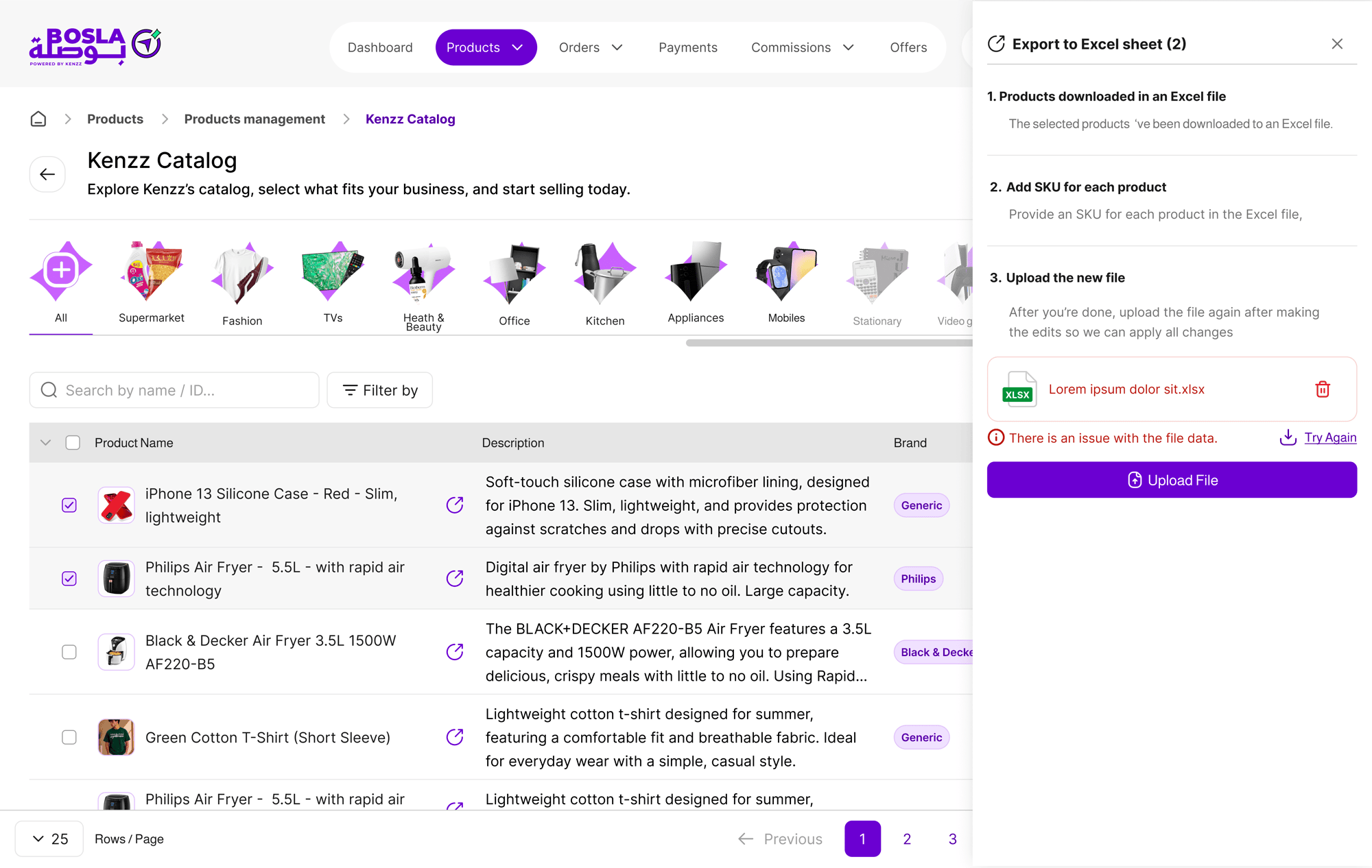
I also designed bulk import and export workflows to support high-volume catalog creation.
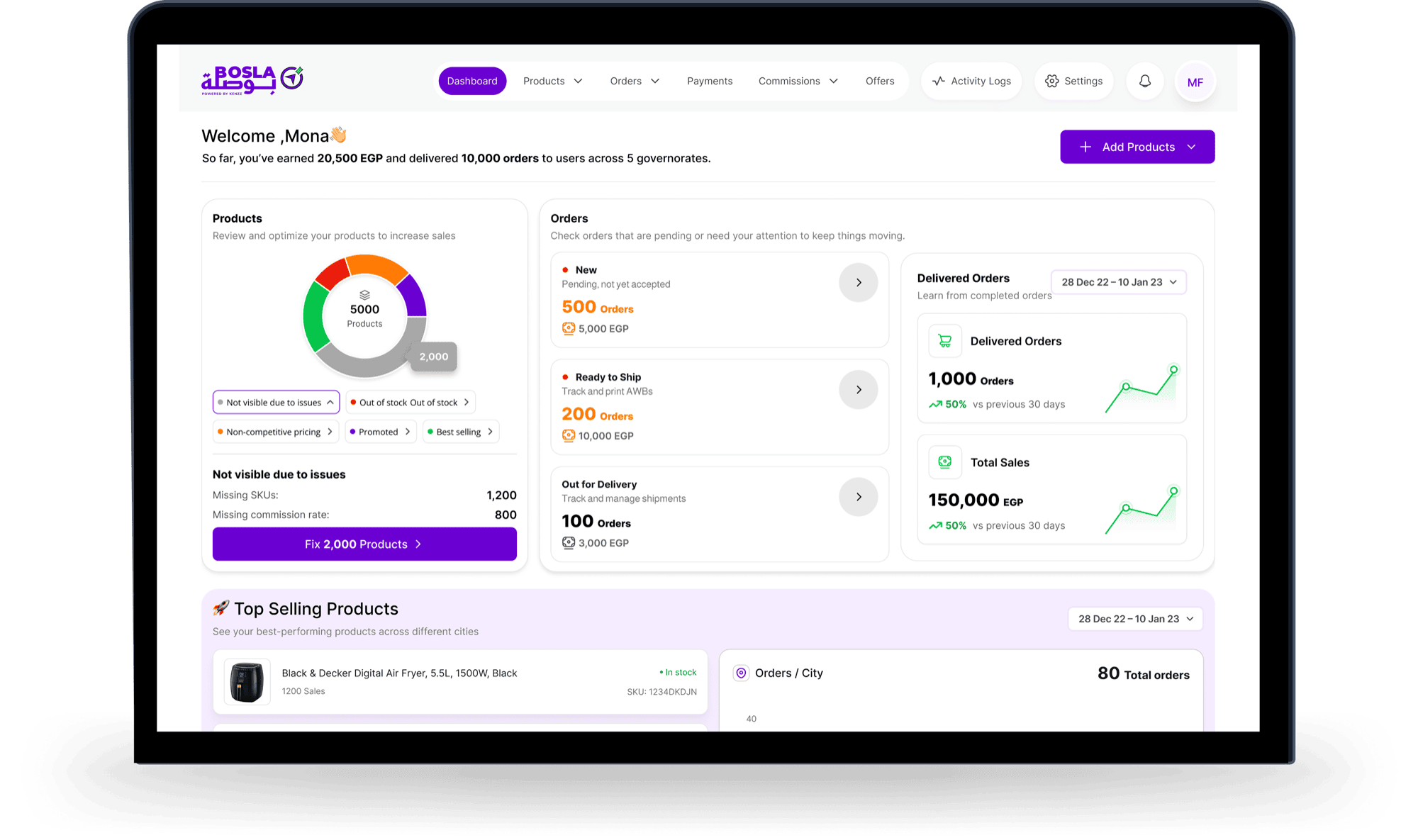
Merchant dashboard
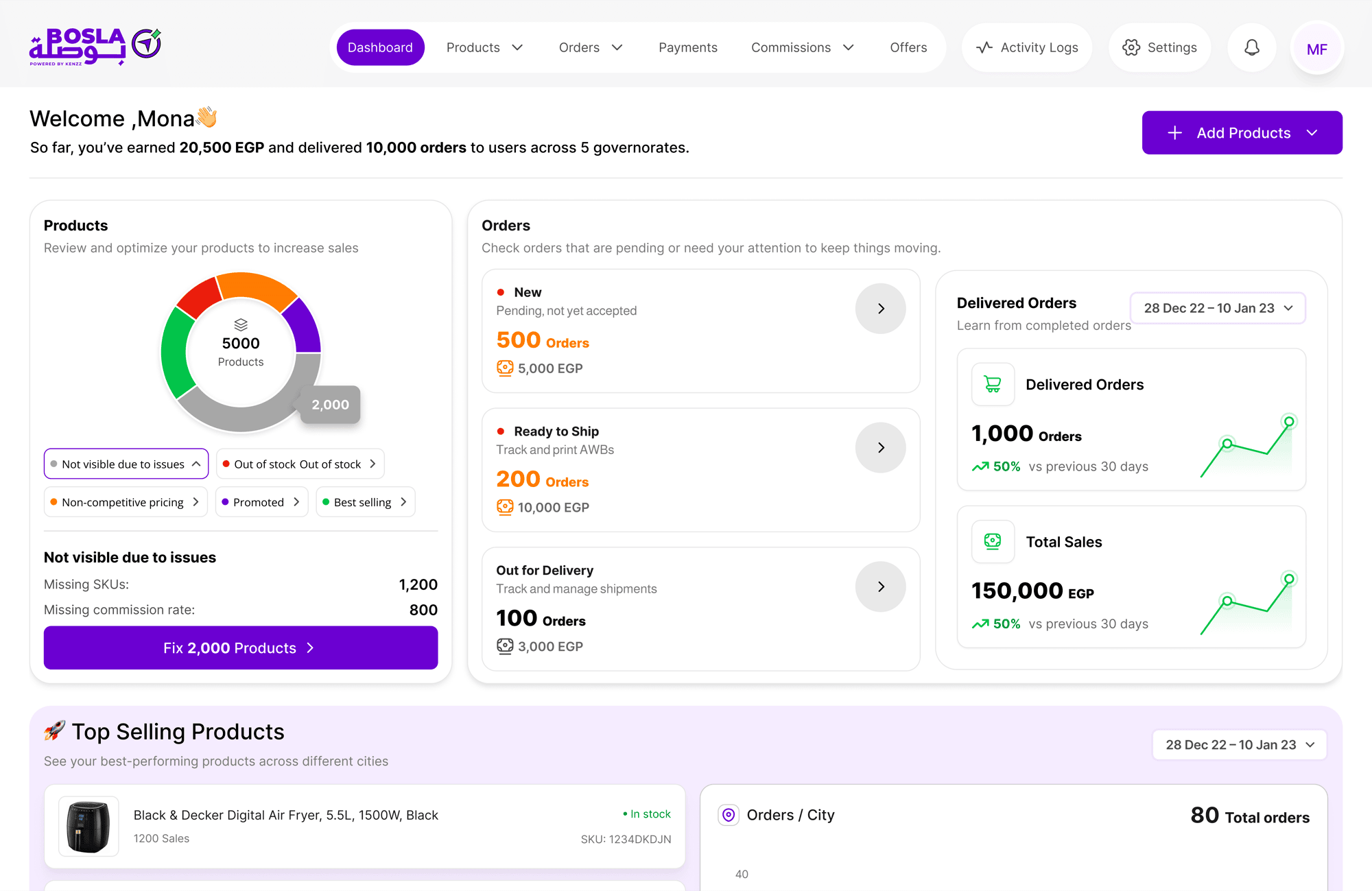
To support high-frequency operational use, I introduced a homepage dashboard that gives merchants a bird’s-eye view of their work. It reduces navigation effort, surfaces high-priority actions.
Impact
These outcomes were measured through ops tracking dashboards and post-launch workflow reporting over the first six months.
94%
drop in frontend content errors
Strict cell-type rules, variant safeguards, and automated check stages caught issues before they reached the user-facing app.
13%
reduction in order rejection rates
Streamlined validation flows and real-time error checks enabled merchants to resolve issues earlier.
40%
vendor activation growth without account-manager dependency
Self-serve onboarding and automated setup reduced operational dependence on account managers and allowed the business to scale merchant acquisition more efficiently.
11 → 2 days
product time-to-market dropped
Replacing spreadsheets with a dedicated data pipeline removed operational bottlenecks and reduced dependency on account-manager workflows.
Learnings
This project taught me that 0→1 internal tools are less about adding screens and more about redesigning the business workflow itself. The biggest design challenge was balancing the flexibility teams were used to in spreadsheets with the guardrails needed to reduce costly mistakes.
It also reinforced the importance of making system users feel real and role-based. Catalog specialists, pricing managers, content editors, and merchants were not just generic “admins” using the same tool. Each had distinct goals, risks, and moments of friction, and the product became stronger once those workflows were designed explicitly.
Let’s make something great.
Open to product design roles and thoughtful collaborations.