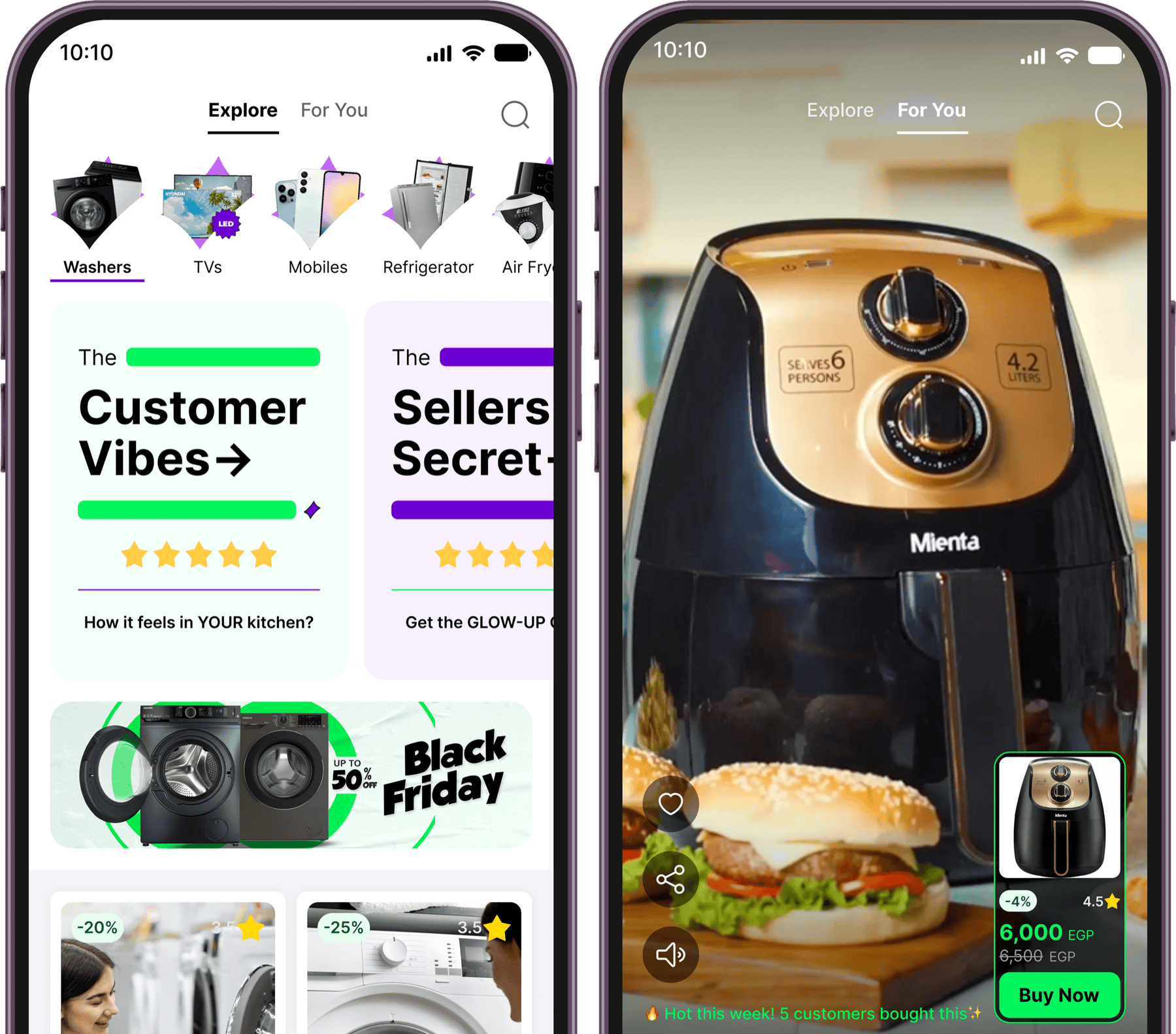
27% ↑ in conversion through trust-based video shopping
How I redesigned a high-friction appliance journey by helping users validate expensive products with more confidence before purchase — the way they used to in physical stores.
Overview
Kenzz was seeing significant drop-off in high-value appliance purchases. Users showed intent, but many hesitated before buying because they did not trust that the product would meet expectations in real life.
I investigated the behavior behind that hesitation through data analysis, interviews, and concept testing. The result was a video-led experience designed to bring validation earlier into the journey and reduce uncertainty before checkout.
This direction contributed to a 27% increase in high-value products (home appliances) conversion, along with stronger engagement and higher product confidence.
About the company
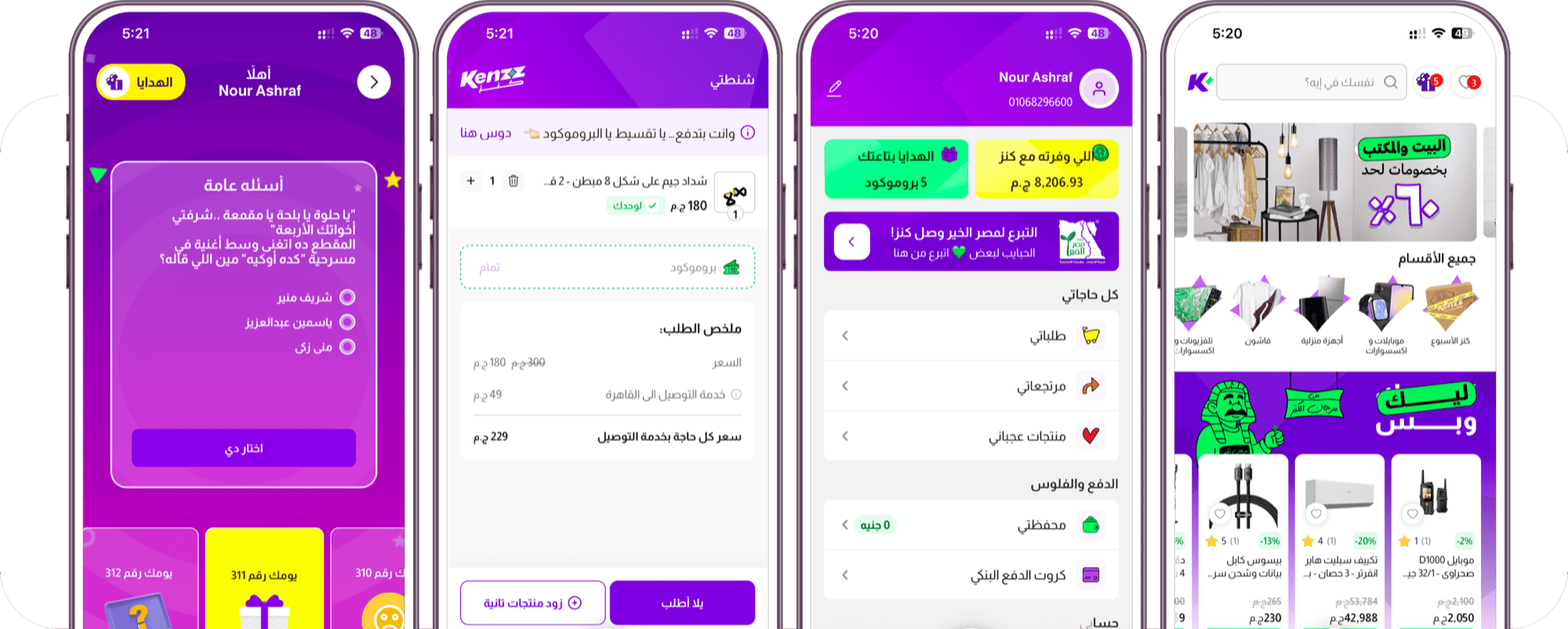
Kenzz is built for mass-market shoppers, focusing on familiarity and fast decisions in a mobile-first experience.
So, what may feel visually crowded in one culture is intentional in another. Kenzz uses dense layouts, local slang, and bold colors to feel familiar, fast, and commercially direct.
The challenge
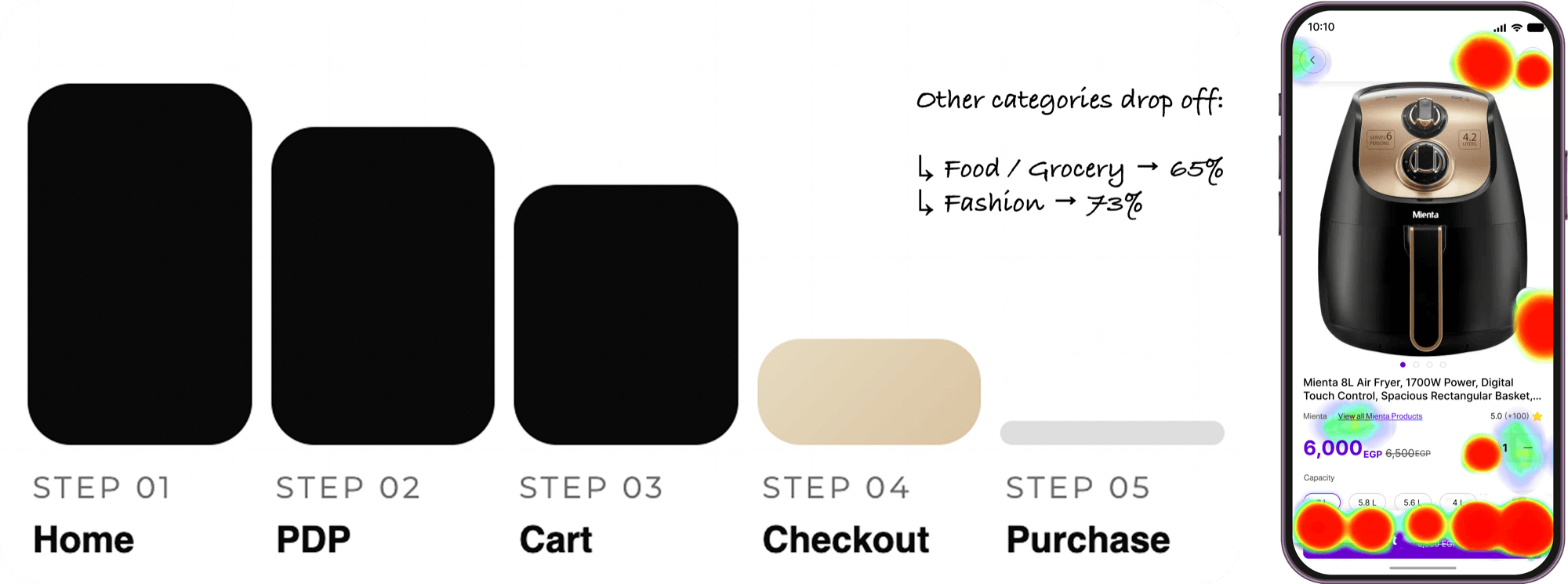
Data analysis revealed an 85.8% drop-off in the Home appliances purchase funnel.
Users added high-value appliances to carts or wishlists, but many hesitated before completing the purchase.
Process
Process overview
I'm heavily influenced by the design thinking approach,
- I understand the user pain points.
- I align the strategic goals with user needs.
- I document insights and ideate solutions.
- I collaborate with the team to prioritize them.
- I prototype and test results
User pain points
Low trust in product quality
Users worried that what arrived might not match what they saw online. Buying from a local store felt safer for expensive items.
Need for physical validation
Shoppers wanted to inspect the product, experience its details, and feel more certain before committing to purchase.
Documenting Insights
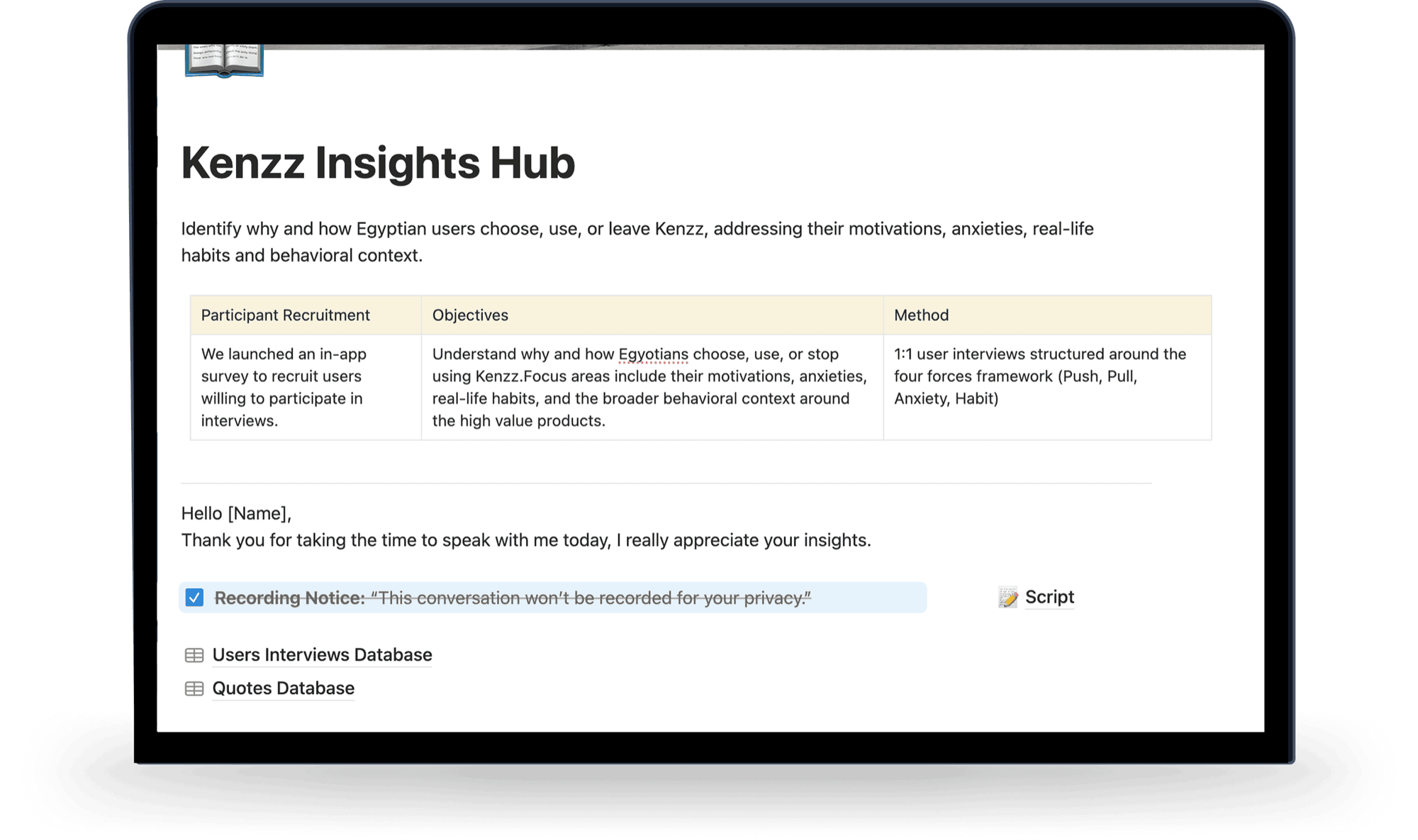
I synthesized interview findings, behavioral observations, and empathy mapping to better understand how confidence breaks before purchase.
User journey map - 1 persona
The goal is
To help users better understand high-value products before purchase so they could make more confident decisions with less uncertainty.
How AI Helped
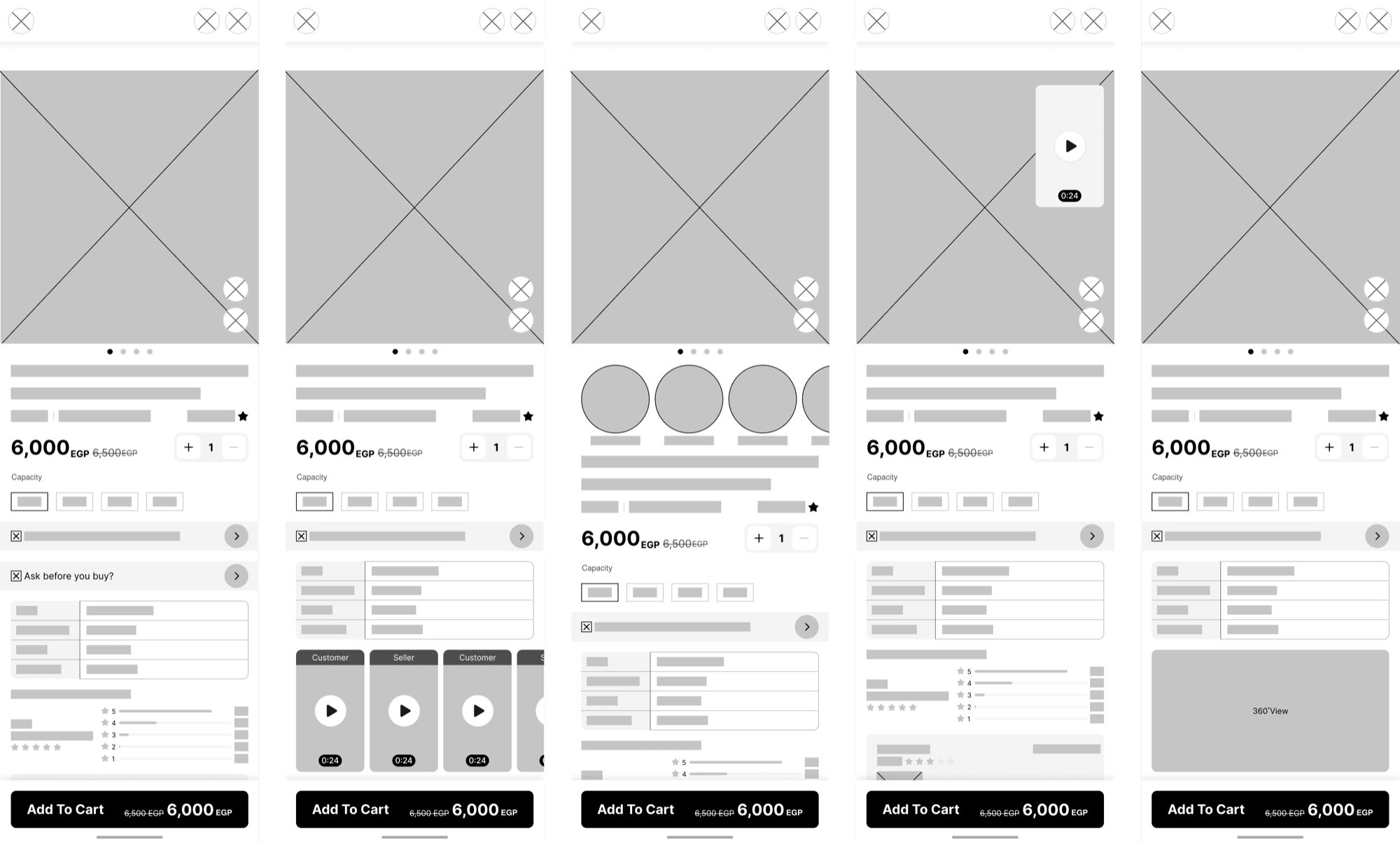
Used Motiff AI to quickly generate and compare layout directions for key entry points like the product page, speeding up early exploration and interaction decisions.
Solution
What I rejected
I rejected static education-focused concepts because they informed users without meaningfully reducing hesitation.
What I chose
I chose a multi-source video proof direction that combined product demonstration, seller guidance, and validation content in a more immersive way.
Why it won
This direction worked because it supported both discovery and validation. It helped users see products in use, made the experience feel more credible and scalable.
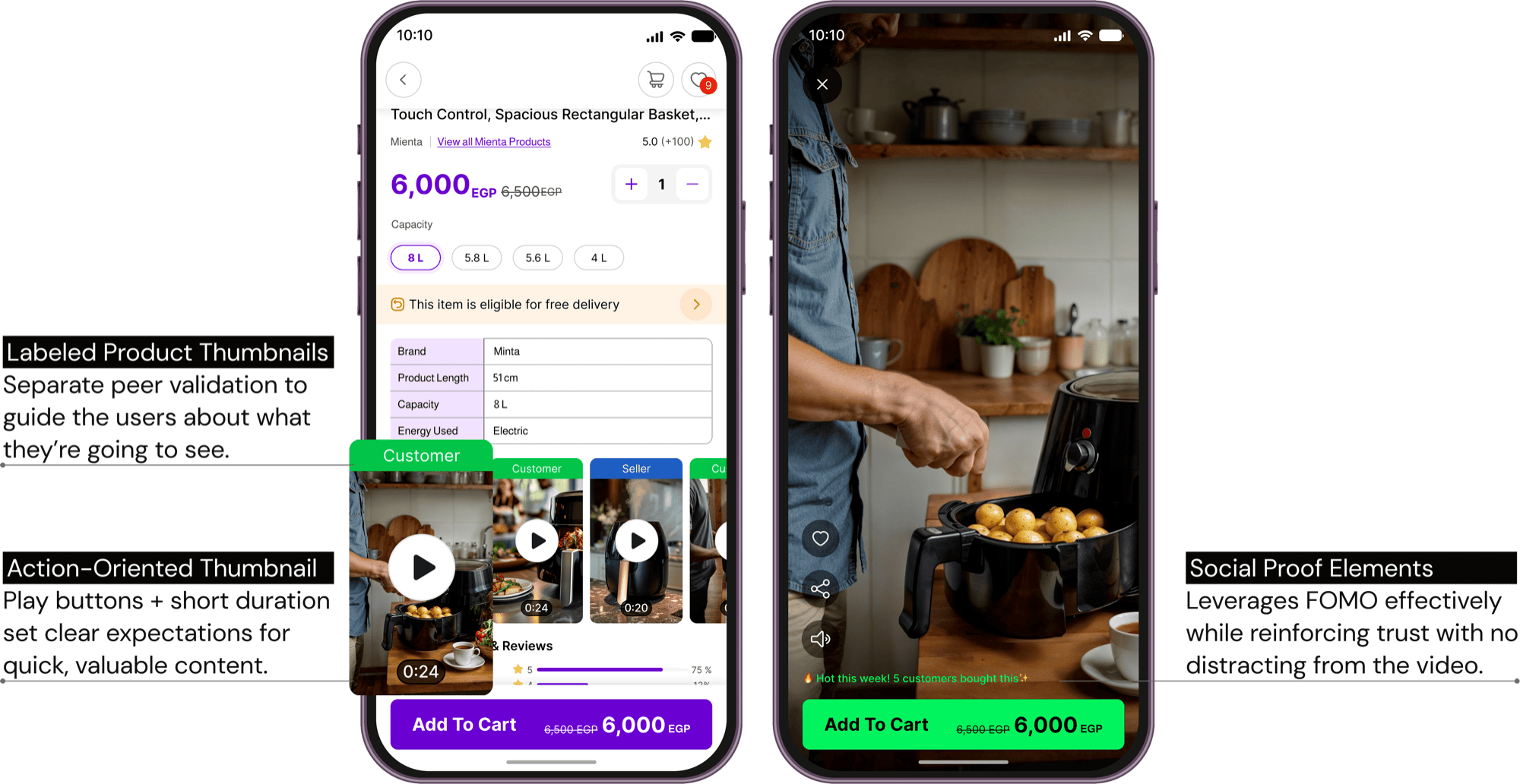
Split testing
To validate the first phase, we tested a version with video support against the existing experience.
Findings
Increased time spent led to higher confidence - Users were less likely to leave before taking action.
That's why
We decided to design it as a full experience, not limited only to the product detail page to introduce trust earlier in the journey.
Phase 2
Overview
We moved forward with Phase 2, a full video shopping experience, after data showed that users who engaged with Kenzz TV converted at a higher rate than non-viewers. So, I started with testing different layouts for the same experience, to keep the users engaged earlier in the journey.
Usability testing
How?
I tested two different variations with 8 users using the same task and overall experience structure.
why?
The goal was to understand which layout is easier to use, and more natural within the shopping journey.
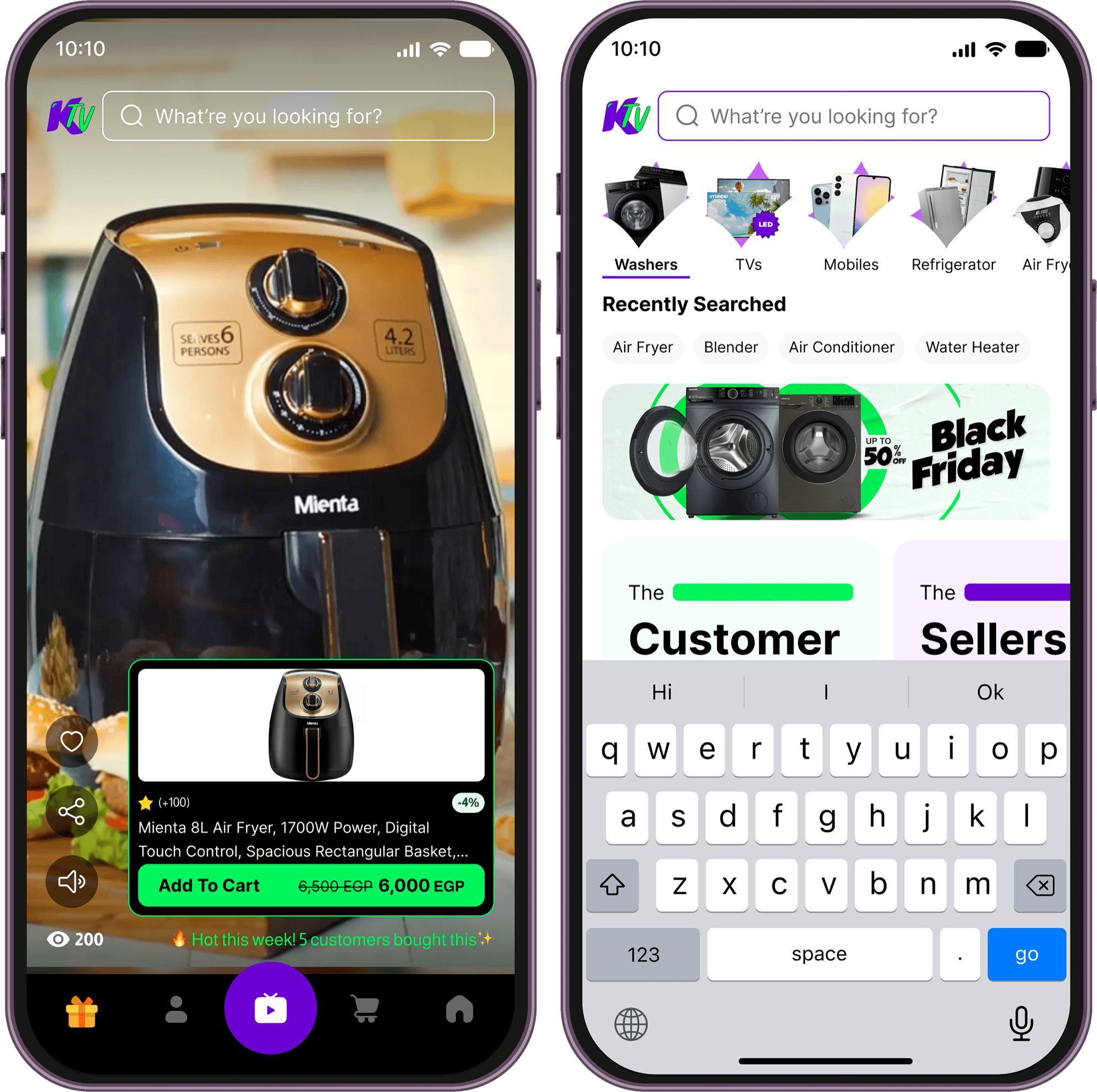
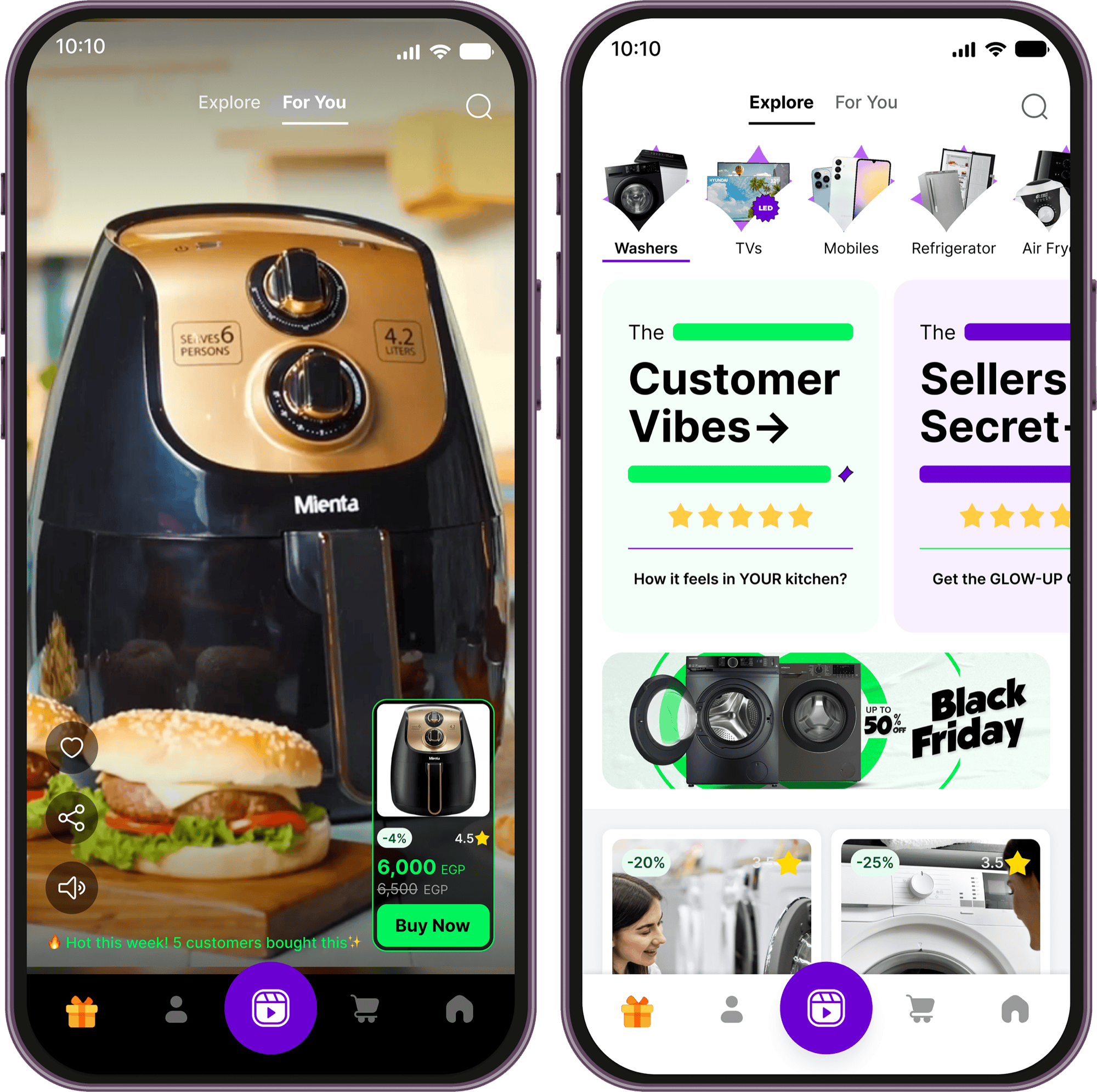
results
The selected navigation-based direction performed better because:
- it made the experience easier to discover.
- giving higher hierarchy to the video for better scanning.
Solution
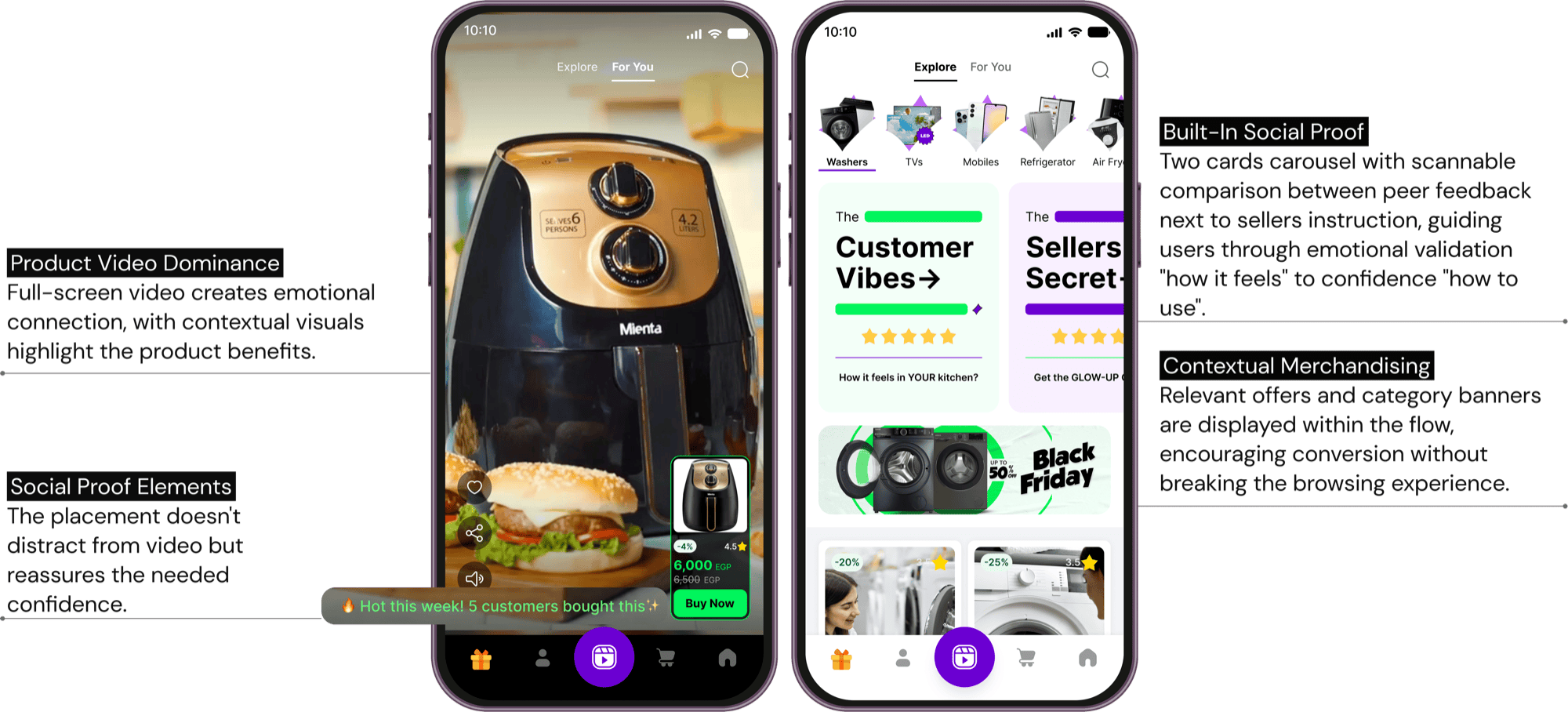
The final experience combined product demos, peer validation, and seller expertise into one trust-building platform.
Instead of relying only on product details, users could engage with more realistic proof earlier in the journey. This helped the experience feel less like browsing static information and more like validating a real purchase decision.
Impact
The final direction improved trust at critical decision points and helped users move forward with more confidence when considering high-value products.
Core outcome
27%
increase in overall relative conversion
Additional metric
+10%
increase in overall relative AOV
Additional impact

We launched the feature just a year ago and added simple ways to encourage customers to provide video reviews, helping users build their content library themselves. Today, the library has almost 10K videos, and 57% of them are user-generated authentic reviews created at zero cost. View Linkedin post
3.5-3.6x
higher purchase conversion among users who engage with Kenzz TV compared to non-viewers.
~5x
higher conversion among users who return to Kenzz TV more than once, showing the impact compounds with repeat engagement.
~1.6x
higher session conversion rate for TV-exposed visits versus sessions with no Kenzz TV interaction.
Let’s make something great.
Open to product design roles and thoughtful collaborations.